
Please enter a valid location
ONLY THE ELITE EARN A BREVANT NUMBER
When you see a Brevant® seeds product number, it’s actually the last thing to show up on the seed bag, not the first. Behind each number sits years of breeding decisions, hundreds of thousands of inbred lines, and a testing system built to put only elite genetics into each bag.
For retailers, the true confidence behind strong Brevant seeds yields and consistent performance is not just luck, but an output of an average seven-year testing process that stacks the deck even before a single seed enters the grower’s field.
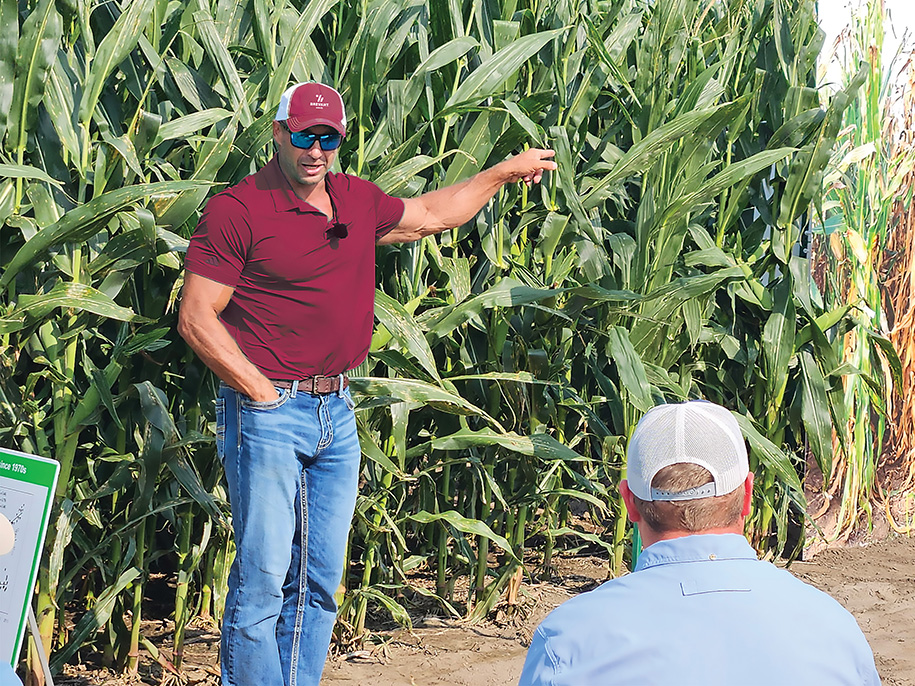
Brandon Wardyn, North America Corn Evaluation Zone Lead who has been focused on plant breeding for over twenty years recently highlighted the rigorous process from first cross to last plot that each hybrid must pass to earn a Brevant seeds number.
It Starts with A Purpose
While the genetic possibilities can be endless, great genetics without a goal go nowhere. That’s why every new Brevant seeds product begins with a conversation about what the market, the retailer, and the grower actually need.
For Brandon, it’s critical to take input by each region and understand the dynamic agronomic challenges that continue to evolve.
“All the technology and tools are great, but unless we have a purpose for what we're doing and a goal, it doesn't matter. The first step is understanding what we’re trying to develop. Asking questions like; What does this geography need more of? Where is the market going in 7 or 8 years?”
A Funnel That Starts Wider – And Ends Tighter
Twenty years ago, a corn breeding program might start with 20,000 inbred lines. Today, the top of the funnel with Vylor is more than 10 times larger — and the elite class coming out the other side is 10 times smaller.
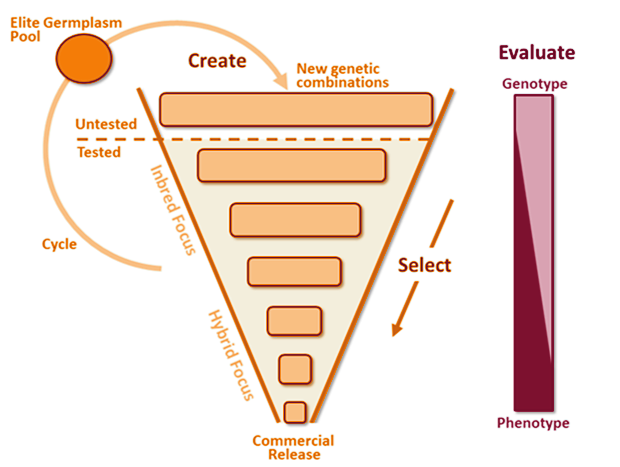
New technologies including prediction models, machine learning, and AI get applied before most lines ever hit the field. Every hybrid that moves forward is tested with the same rigor — but this technology now helps breeders pick which hybrids to make in the first place — so the lines that do get tested are already the best of the best.
“The technology helps us create more, and we've scaled that effectively. We're able to focus our phenotyping onto a smaller number of lines and the beauty of that is — they're all elite lines. We are starting the funnel with a much higher grade of hybrid than we've ever had before.”
Selecting Only from the Elite for Consistent Performance
The biggest shift over the years is in what doesn’t stay in the funnel — and why. A decade ago, 40 to 50% of hybrids were taken out of the pipeline because of agronomic flaws or instability and growers took the yield that was left. Today, that discard pile has reduced to only about 3 to 5% of late-stage hybrids.
The final cut is about which elite hybrid fits not only the yield and agronomic performance, but the original purpose — stability, maturity, disease package, management fit. While hitting top-yields are exciting, there is a lot of focus on helping those lower yielding acres increase yield potential, regardless of the growing challenges that come each season.
“The hybrids we throw away during testing now are such high quality. The only reason we're throwing them away is because they don't yield as much as the other hybrids that do the exact same agronomic things. It seems like we have a step change every year, but next year the step change is even higher.”
Pipeline to be Excited About
As retailers look to the 2027 Brevant seed class, it’s not just confidence they can have from numbers on a sales sheet – it’s the understanding that the hybrids landing in bags this season cleared a tougher bar than any class before them — and the ones coming up behind them are coming through the same funnel, winning with the same rigorous testing that is leveling up year after year.
"These hybrids that have made it through the last 5 years of testing, they're pretty special. The level of excitement is as high as it's ever been for us — not only for this 2027 class, but also the things we have coming down the pipeline. I don't see this slowing down for the next decade."
From breeding to bag, see how the rigorous testing of Brevant seed comes to life in growers’ fields, https://www.brevant.com/us/story/profiles-in-winning.html
OTHER VIEWERS WERE ALSO INTERESTED IN
- Victory in the field for sixth-generation corn growers
- Soil to Silo: Investing in Crop Success
- Handling Objections with Curiosity
- Corn Maturity and Dry Down