Diagnosing Emergence Issues Using a Square-Bottom Spade

Written By Brevant® Seeds Agronomy Team 
Something went wrong. Please try again later...

Dig to the Bottom of Emergence Issues

  • The square-bottom spade is a useful agronomic tool that can help get a better picture of emergence issues below ground.
  • The square-bottom spade helps to visually see emergence issues that would be difficult to reveal with a trowel digging from the top down.
Opening Up the Seed Furrow with a Square-Bottom Spade

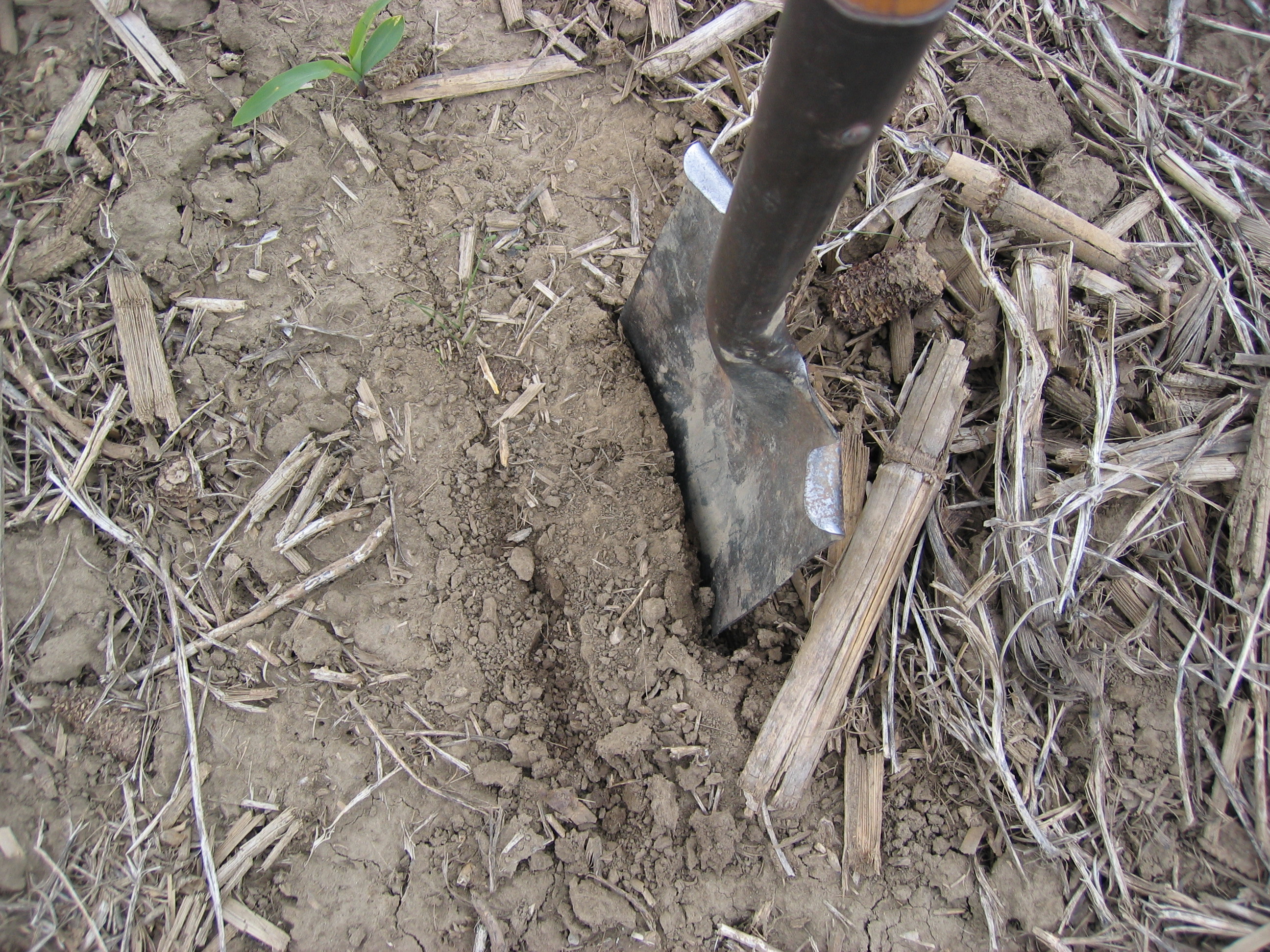
  1. Place the spade about 4 to 6 inches from the row and insert it to a depth of about 8 to 10 inches.
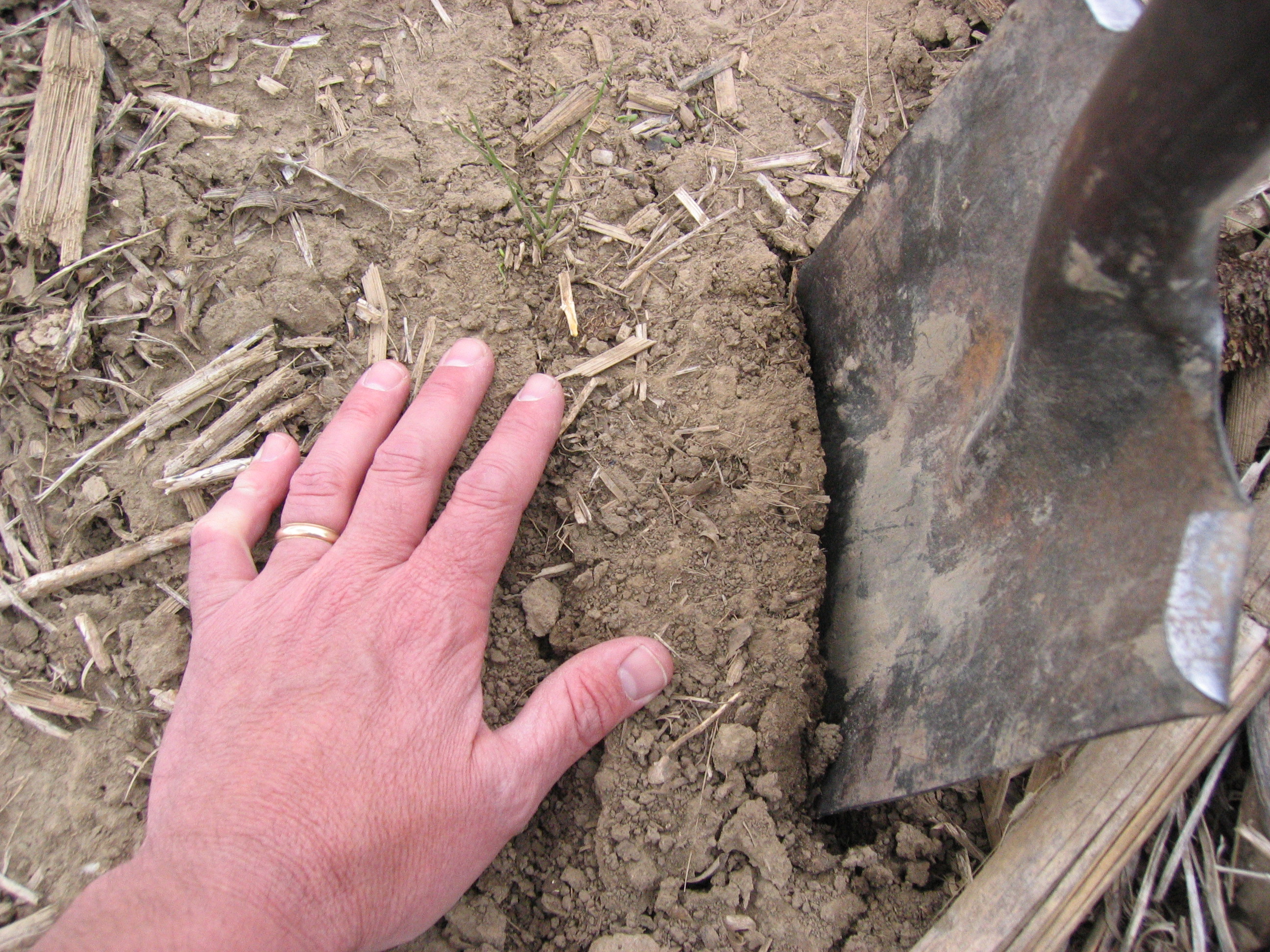
  2. Place your other hand on the opposite side of the seed row and hold it in place while you pry with the spade.
  3. The seed furrow seam should open with relative ease. Getting the soil to break cleanly at the seed furrow slot doesn’t work every time. It works best when the soil is moist and/or has a higher clay content.
  4. This technique helps preserve the structure of soil around the seeding and can reveal the presence of side wall compaction.
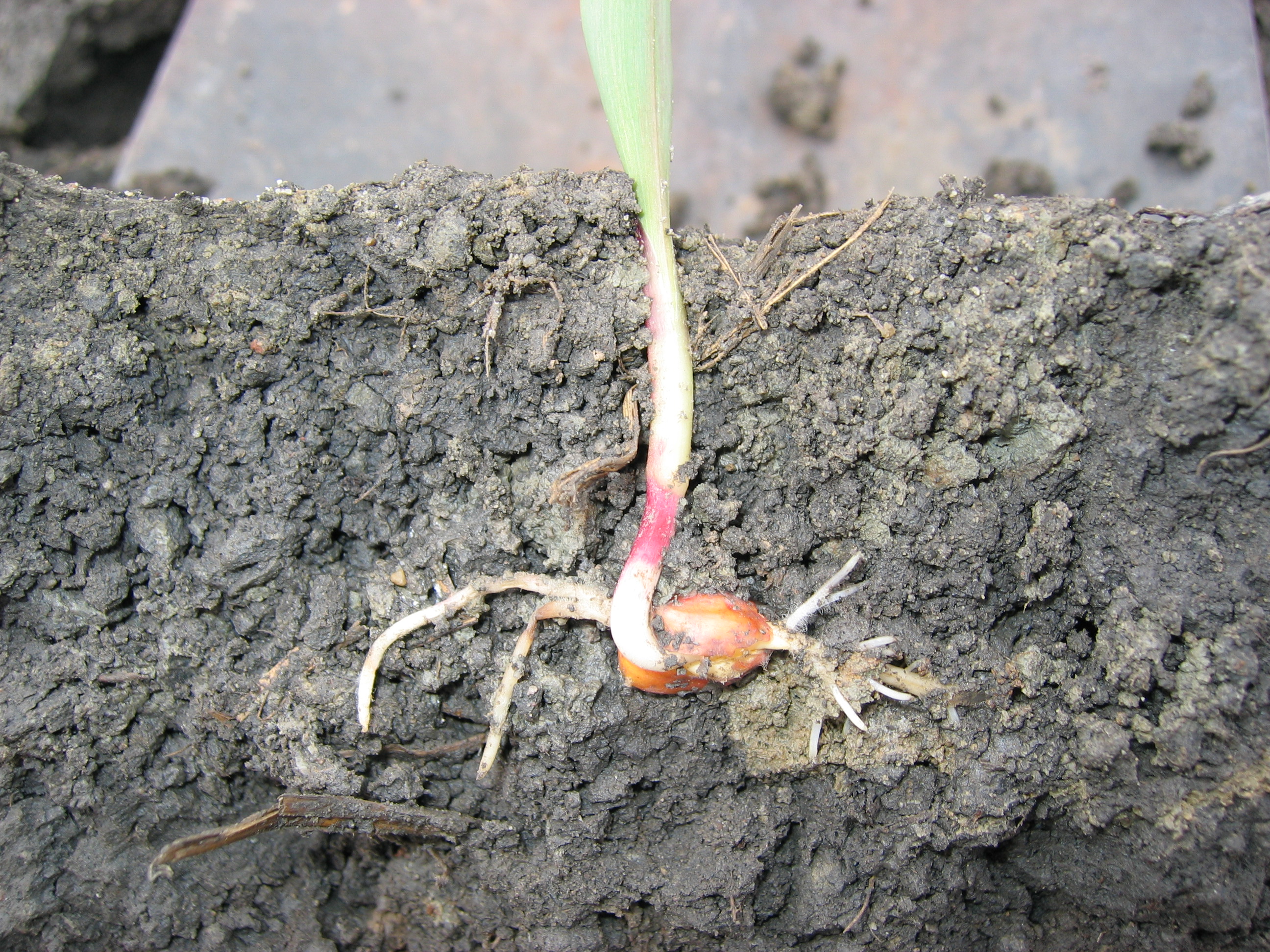
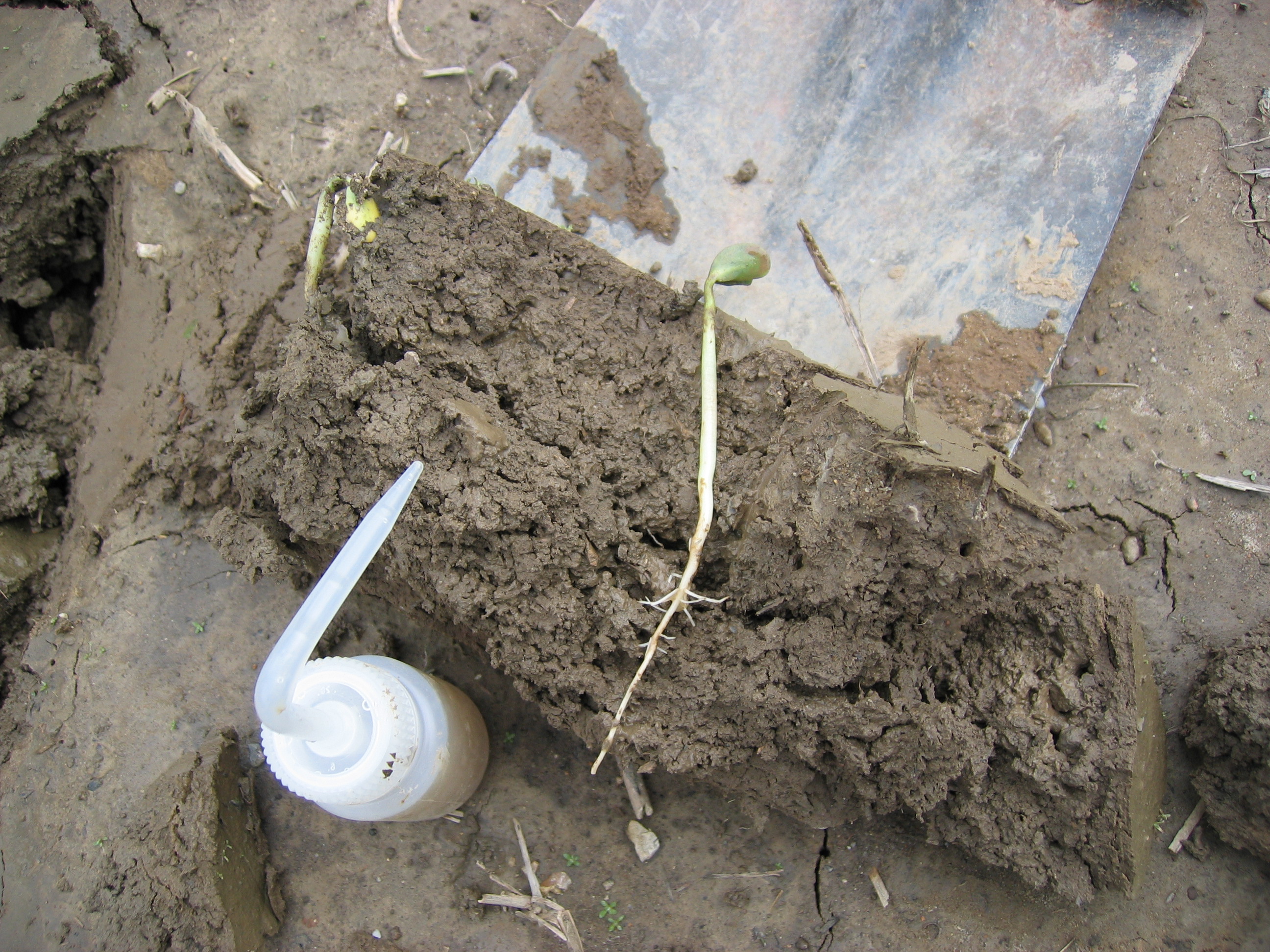
    This plant has restricted root growth due to the side wall compaction. The roots are also showing some seedling diseases. This combination of factors has slowed the growth of this emerging seedling.

Diagnosing of Early Emergence Issues

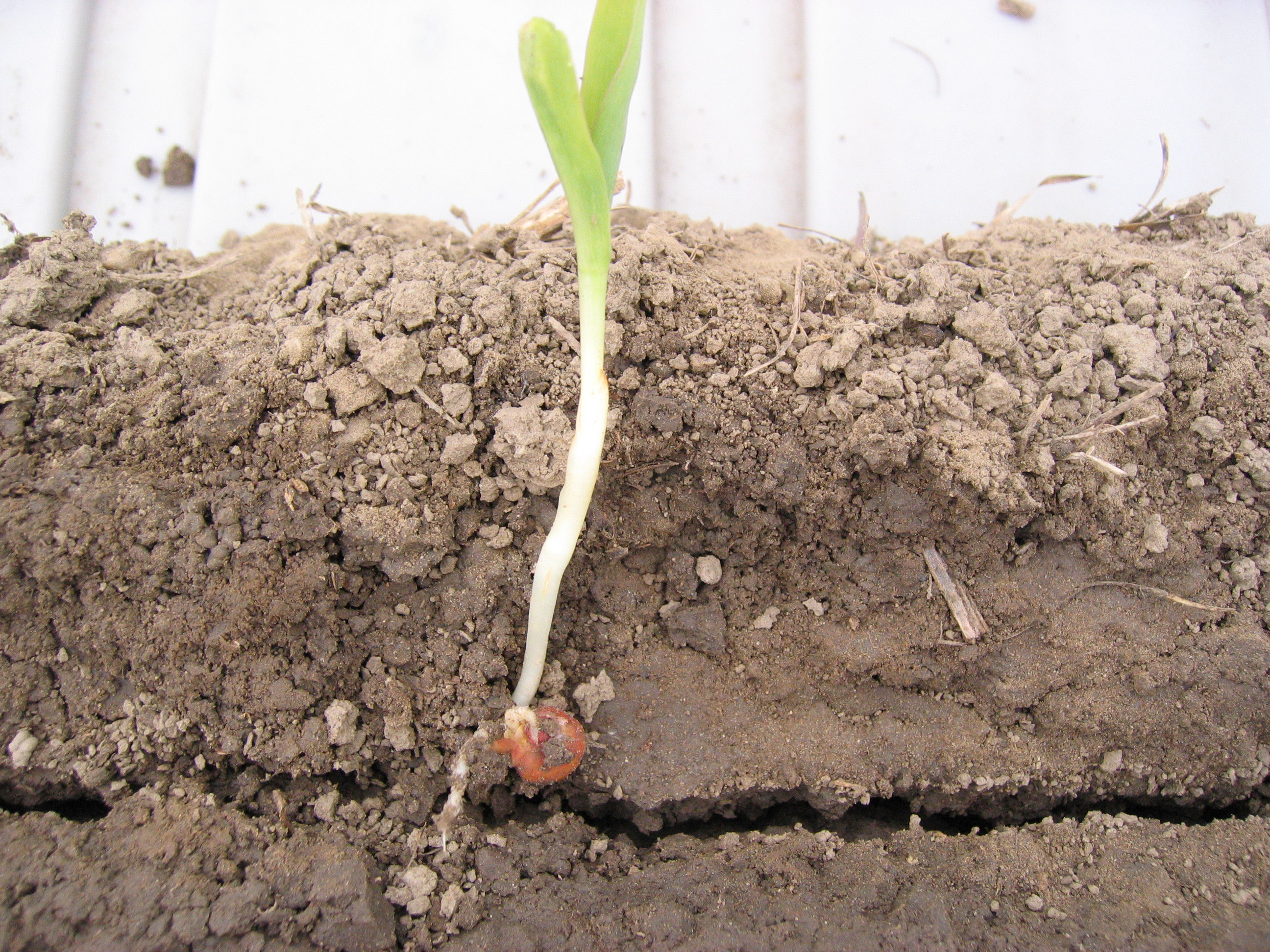
  • In this example the radicle was damaged by seedling diseases but note new growth on both the radicle and seminal roots. There are signs of sidewall compaction.

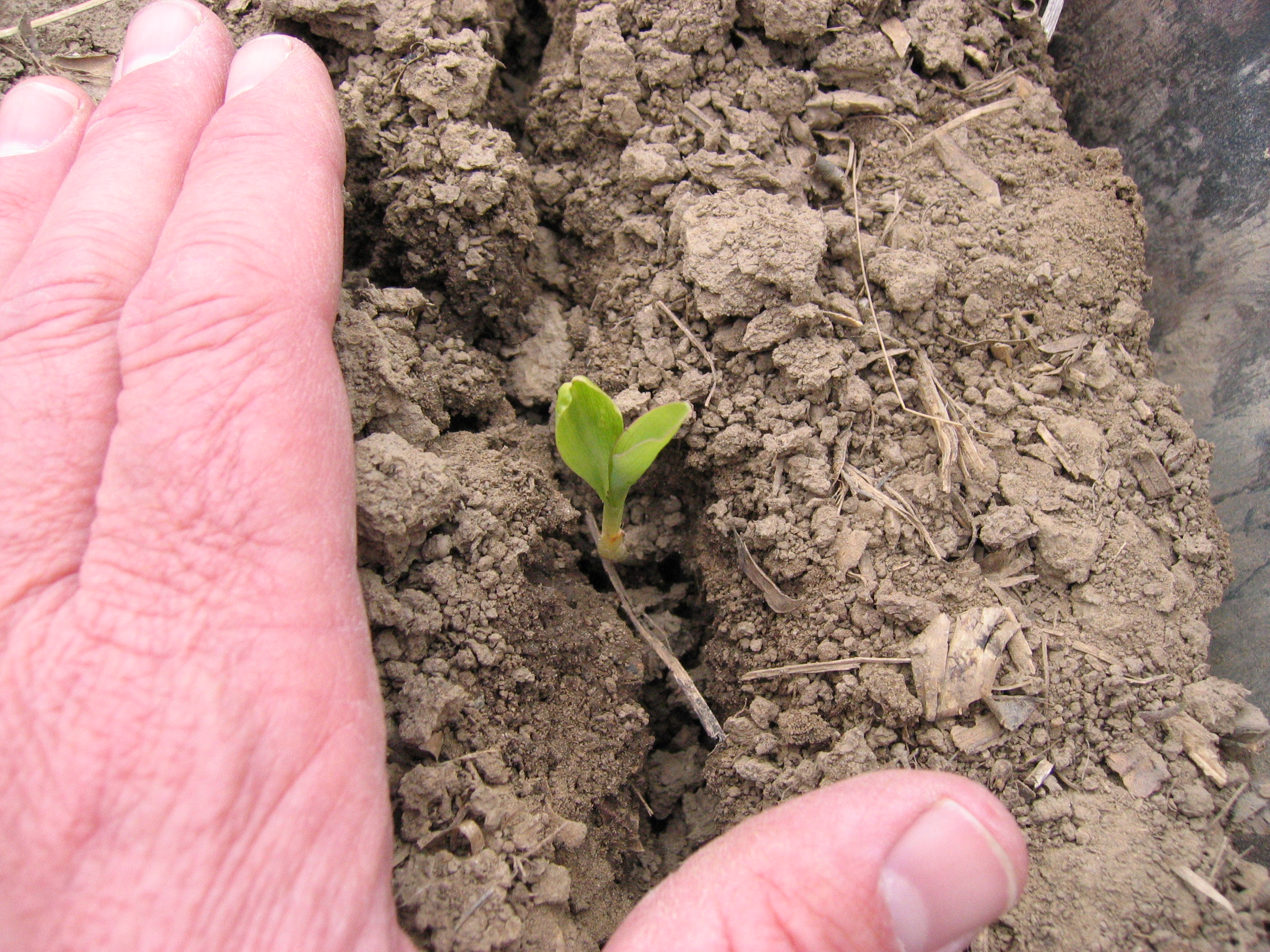
  • Leafing out underground due to soil crusting.

  • This seeding shows root decay issues. The soil color indicated that this soil is not very well drained.

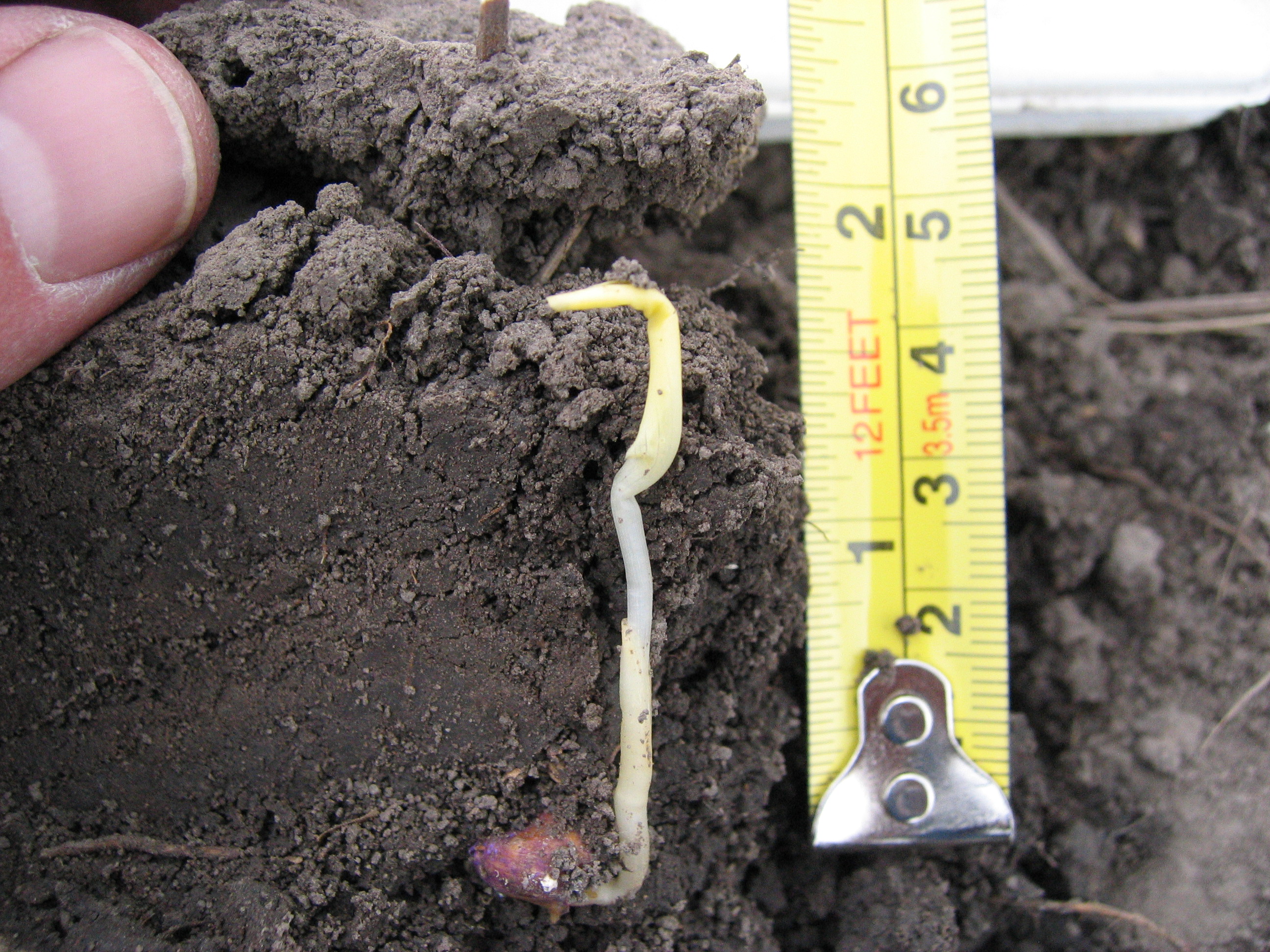
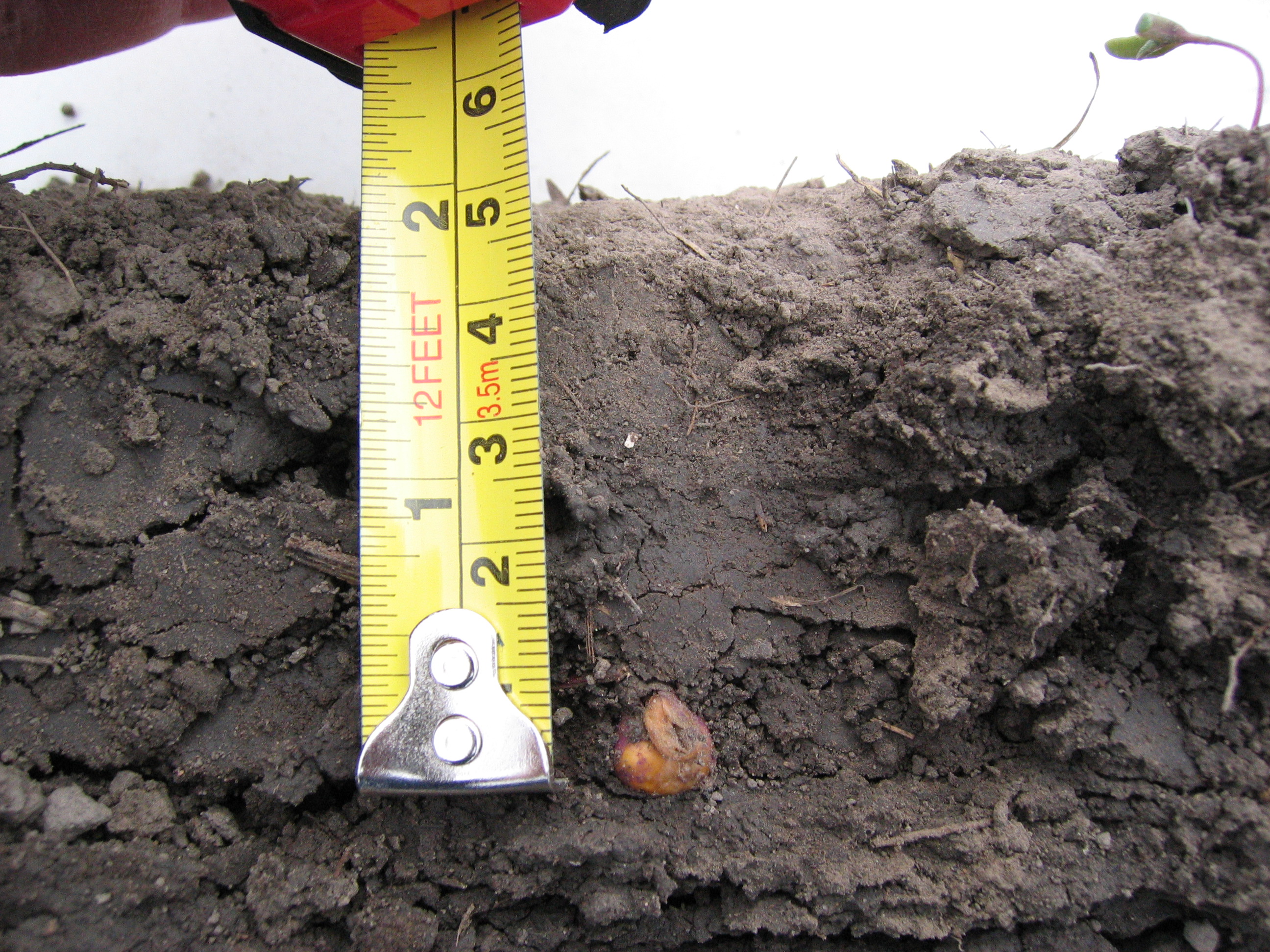
  • Opening up the seed furrow with a square-bottom spade reveals exactly how deep the seed was planted.
  • This seed shows considerable seed rot. The field had some drainage issues. It also looks like the embryo may have some insect feeding, most likely seed corn maggot.

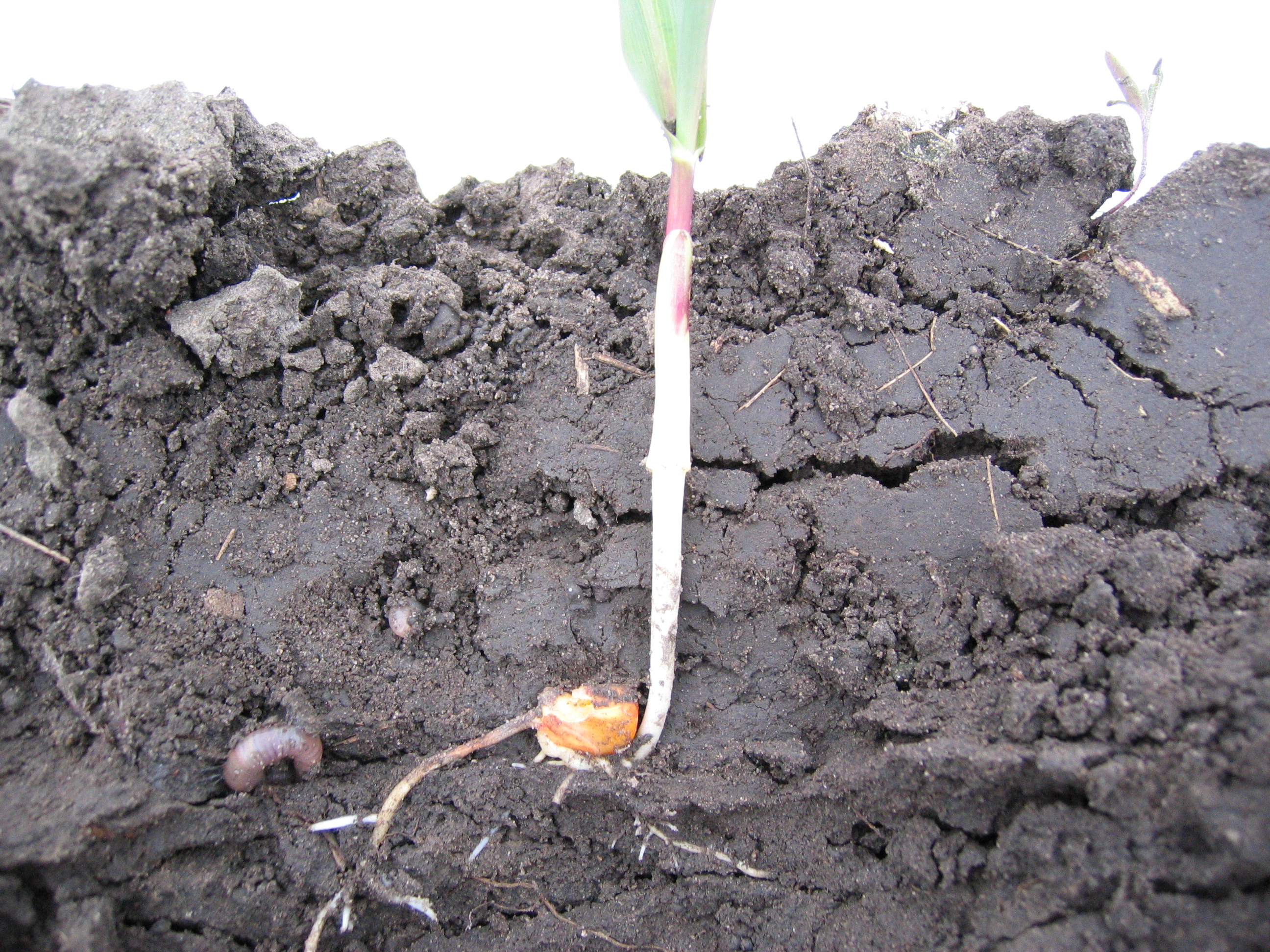
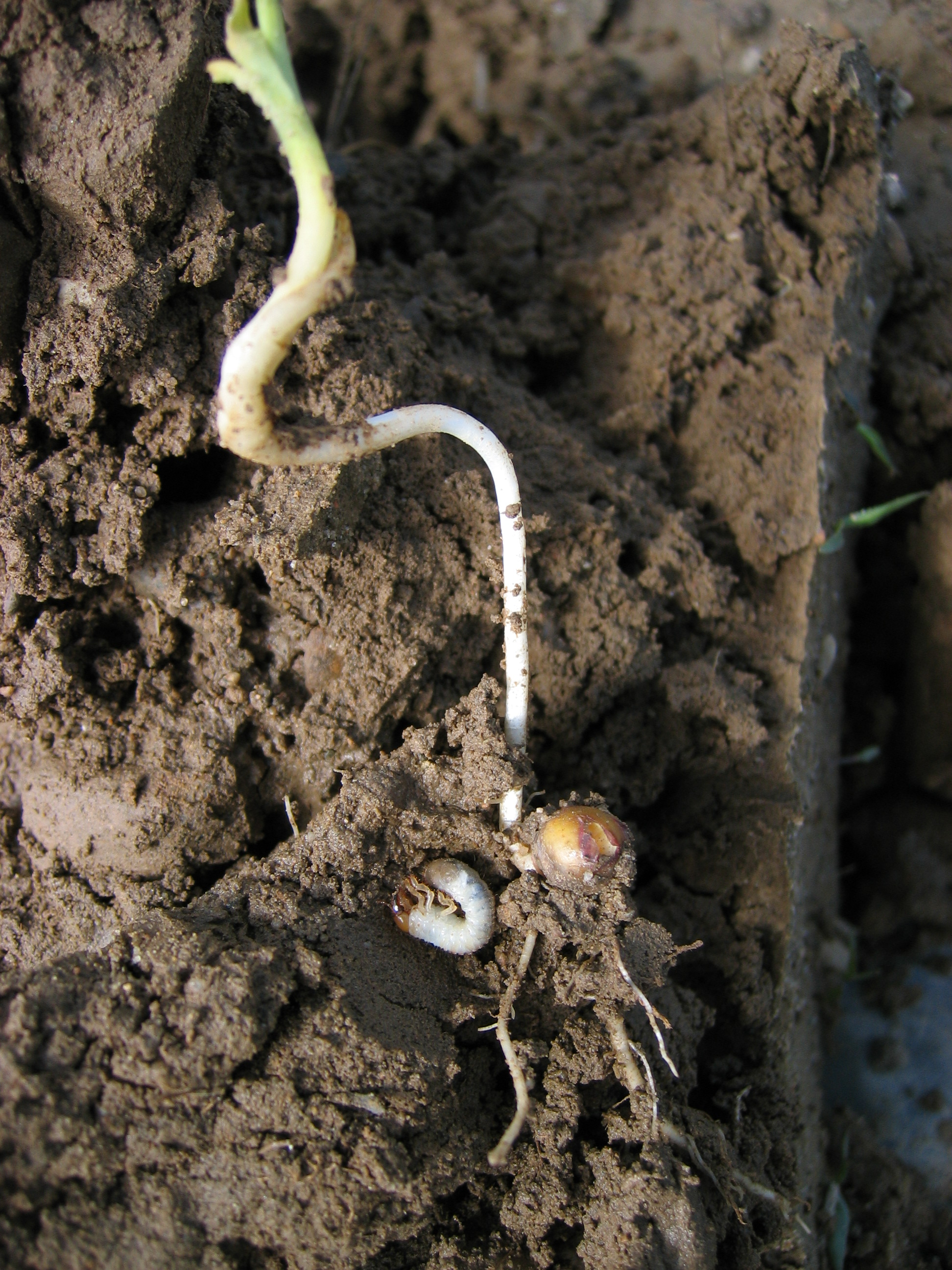
  • In this example, the grower noted uneven growth in this area of the field. Opening up the seed furrow revealed the insect culprit – white grub, active right next to the roots.

  • About every 30 to 40 feet in this field there were two consecutive plants in the row that were slow to emerge or not emerged at all.
  • In general, plant uniformity was good but there were enough skips to cause concern.
  • Soil conditions for these seedlings were good, with no sign of side-wall compaction. However, the roots were not in good shape — notice the dark discoloration of the radicle root on the stunted plants.
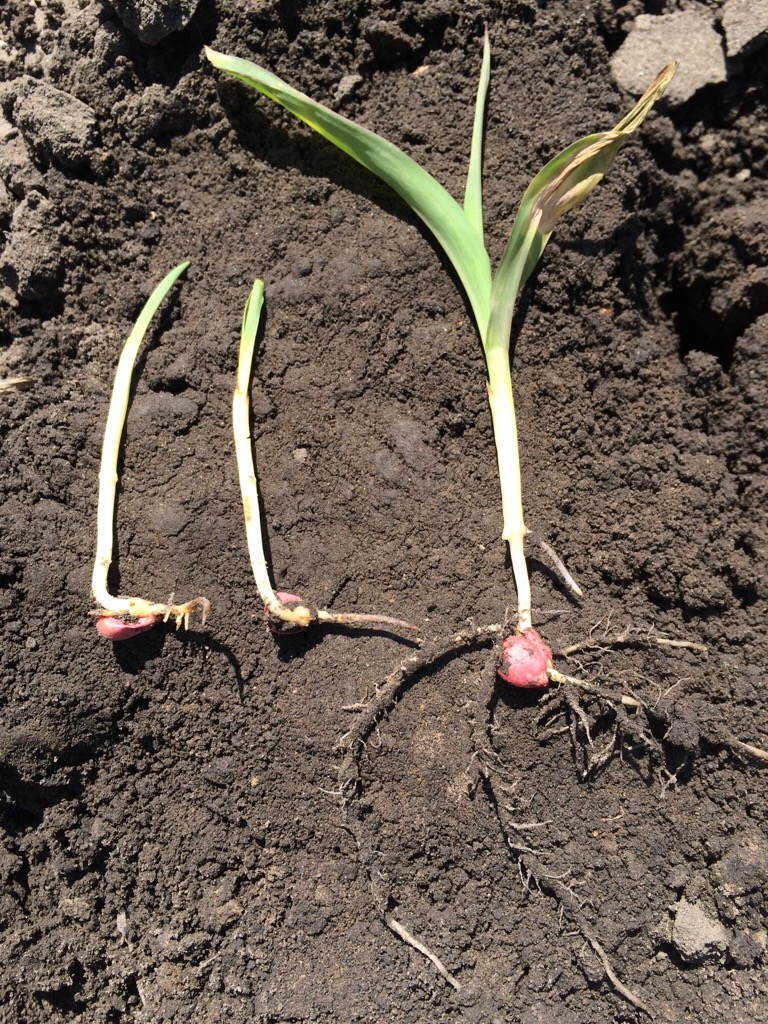
  • The two plants on the left were side by side in the field and looked like potential runts. This is a very common occurrence where disease and/or insect issues usually impact two to three plants together.
  • The field was planted April 18th and was visited on May 31st. The seeds had been in the ground for over 30 days, far beyond the life of the fungicide.
  • The plant on the right had a robust radicle and seminal roots, as was typical of most of the plants that had more timely emergence.
  • This picture clearly shows the importance of the radicle and seminal roots in achieving uniform emergence. If anything happens to the radicle, the plant is set back and may lose the emergence race and become a runt.
  • Using a spade to open the seed furrow helped reveal the emergence issues taking place below ground.

  • A small water bottle can be a useful tool to wash off the roots in order to examine them more closely.

Summary

  • Take advantage of the natural soil seam created by the planter’s double disc openers to help reveal emergence issues.
  • Learn the technique of opening this soil seam with a square-bottom spade.
    • Place the square-bottom spade 4 to 6 inches from the row.
    • Insert the spade well below the seed depth 8 to 10 inches deep.
  • Pry open this soil seam and invite the grower to observe what is happening below ground.
  • Remember that the health of the radicle and seminal roots is the primary driver for uniform emergence.
    • These roots start the plant’s race to the soil surface and will determine which plants become winners or losers.
    • An insect bite, root decay, or side-wall compaction can set these important roots at a growth disadvantage which can turn these plants into runts.

FIRST TO KNOW

Sign up to hear about all the bold moves we’re making, plus agronomic insights, facts and early releases of important information from Brevant® seeds.

SIGN UP